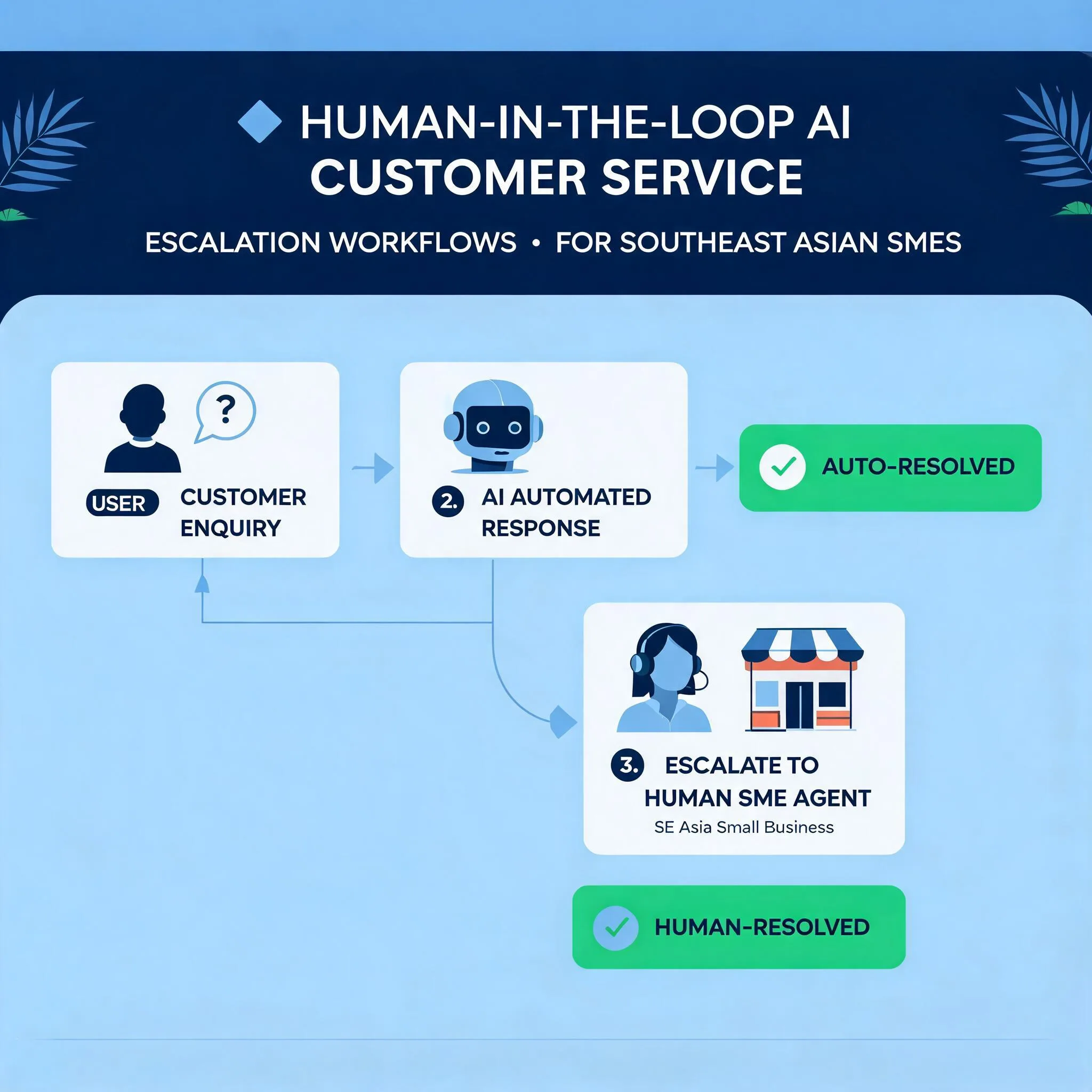
As Southeast Asian SMEs scale their customer service operations, integrating AI into escalation workflows can streamline processes while preserving human oversight. Messaging channels like WhatsApp, Viber, and Messenger are popular across the region, but each platform presents unique technical and operational constraints. This guide outlines a practical, human-in-the-loop workflow that empowers owners, sales leaders, and customer service managers to optimize service quality and escalation without sacrificing staff control.
1. Intake Across Multiple Messaging Channels
Customers reach out via WhatsApp, Viber, Messenger, or other platforms. Intake systems collect incoming messages, ensuring secure capture and timely routing. It’s essential to verify channel API limits and compliance for each platform. For example, WhatsApp and Messenger allow robust integration, while Viber’s automation may require manual review or experimental monitoring (not production auto-reply).
2. Identity Matching and Unified Inbox
To avoid fragmented conversations, integrate identity matching. Map customer IDs, phone numbers, or profile handles into a unified inbox. This centralizes all interactions, enabling service staff to view history regardless of channel. If identity matching fails (e.g., inconsistent handles or privacy restrictions), flag for manual review before proceeding.
3. Case Creation and Owner Assignment
Each new inquiry triggers a case creation. Assign cases to available staff based on workload, expertise, or urgency. Set clear rules: urgent cases (e.g., payment disputes) go to senior agents, routine queries route to junior staff. Document responsibilities—owners oversee resolution, escalate as needed, and update status.
4. AI Response Suggestions with Human Confirmation
AI tools analyze cases and suggest responses, referencing knowledge bases, past tickets, and company policies. For simple queries (e.g., business hours, product specs), AI may recommend a draft reply. However, for sensitive or uncertain issues—such as complaints, refunds, or ambiguous requests—mandatory human confirmation is required. Staff review, edit, and approve every AI-generated reply before sending. Do not claim full automation for channels; staff retain control over outbound communication.
5. Decision Rules and Failure Cases
Implement practical rules on when to rely on AI suggestions versus full human handling. For example:
- Routine FAQ: AI drafts, staff confirm.
- Account issues: Human handles, AI assists with context.
- Escalation triggers: If AI confidence is low or the query involves risk (e.g., financial, privacy), escalate to senior staff.
Failure cases—such as mismatched identity, unclear customer intent, or API errors—must redirect to manual review. Log all exceptions for quality assurance.
6. Escalation and Quality Assurance Review
Complex cases escalate to specialized staff or managers. Track escalation paths and resolution times. Managers conduct QA reviews of AI-assisted responses, ensuring accuracy and compliance. Regularly audit AI suggestions and staff edits to update training data and improve future performance.
7. Follow-up and Closure
After resolution, staff initiate follow-up messages to confirm customer satisfaction and close cases. Record closure notes and update internal systems. For unresolved or disputed cases, flag for additional intervention and document outcomes for continuous improvement.
8. Staff Responsibilities and Control
Throughout the workflow, human staff retain ultimate control. AI tools assist, but cannot replace staff judgment—especially for sensitive or uncertain replies. Staff are responsible for confirming accuracy, managing escalations, and ensuring compliance with company policies and channel requirements.
9. Implementation Steps for SMEs
To deploy a human-in-the-loop workflow, Southeast Asian SMEs should:
- Audit existing messaging channels and API capabilities.
- Integrate unified inbox and identity matching tools.
- Define clear case assignment and escalation rules.
- Configure AI response tools with staff confirmation workflows.
- Train staff on decision rules and failure case handling.
- Establish QA review protocols and feedback loops.
- Monitor performance and update processes regularly.
Consult Redsparks for Tailored Solutions
Redsparks specializes in designing human-in-the-loop AI escalation workflows for Southeast Asian SMEs. Our team can help you select the right tools, configure workflows, and train staff to maximize service quality. Reach out for a consultation to customize your escalation processes across WhatsApp, Viber, Messenger, and other channels.